Table of Contents
You Track Sleep, Steps, Protein… But Not Blood Flow?

You count macros. You close your rings. You track cycles. You optimize sleep scores, recovery metrics, HRV, hydration, and workouts.
But there’s one foundational health marker most people never think to track: Blood flow.
And it may be one of the most important indicators of how well your body is actually functioning.
From energy and endurance to cognition, recovery, circulation, and healthy aging, your body depends on efficient blood flow to deliver oxygen and nutrients where they need to go.
The question is: If you’re tracking everything else… why aren’t you tracking the system that powers all of it?
The Missing Metric in Modern Wellness
Today’s wellness culture is built around data.
People use wearables to monitor:
-
Sleep quality
-
Stress levels
-
Heart rate variability
-
Blood glucose
-
Steps
-
Calories
-
Recovery scores
-
VO2 max
But very few people track the molecule responsible for helping blood vessels relax and support healthy circulation: Nitric Oxide
What is Nitric Oxide?
Nitric Oxide (NO) is a naturally produced signaling molecule that helps your blood vessels dilate, improving blood flow throughout the body.
Healthy Nitric Oxide production supports:
-
Circulation
-
Oxygen delivery
-
Exercise performance
-
Cardiovascular health
-
Brain function
-
Recovery
-
Healthy blood pressure
-
Sexual health
-
Energy levels
The challenge?
Your body’s ability to produce Nitric Oxide declines with age... significantly.
Research suggests Nitric Oxide production can decline as early as your 40s, influenced by:
-
Aging
-
Stress
-
Poor sleep
-
Low vegetable intake
-
Sedentary lifestyle
-
Oxidative stress
-
Oral microbiome disruption (like antiseptic mouthwash)
Which means you can be “doing everything right”... and still not have optimal blood flow.
The Wellness Metric You Can Actually See
This is where the experience becomes different.
Unlike many wellness trends that feel abstract or impossible to measure, Nitric Oxide can actually be tested at home in seconds.
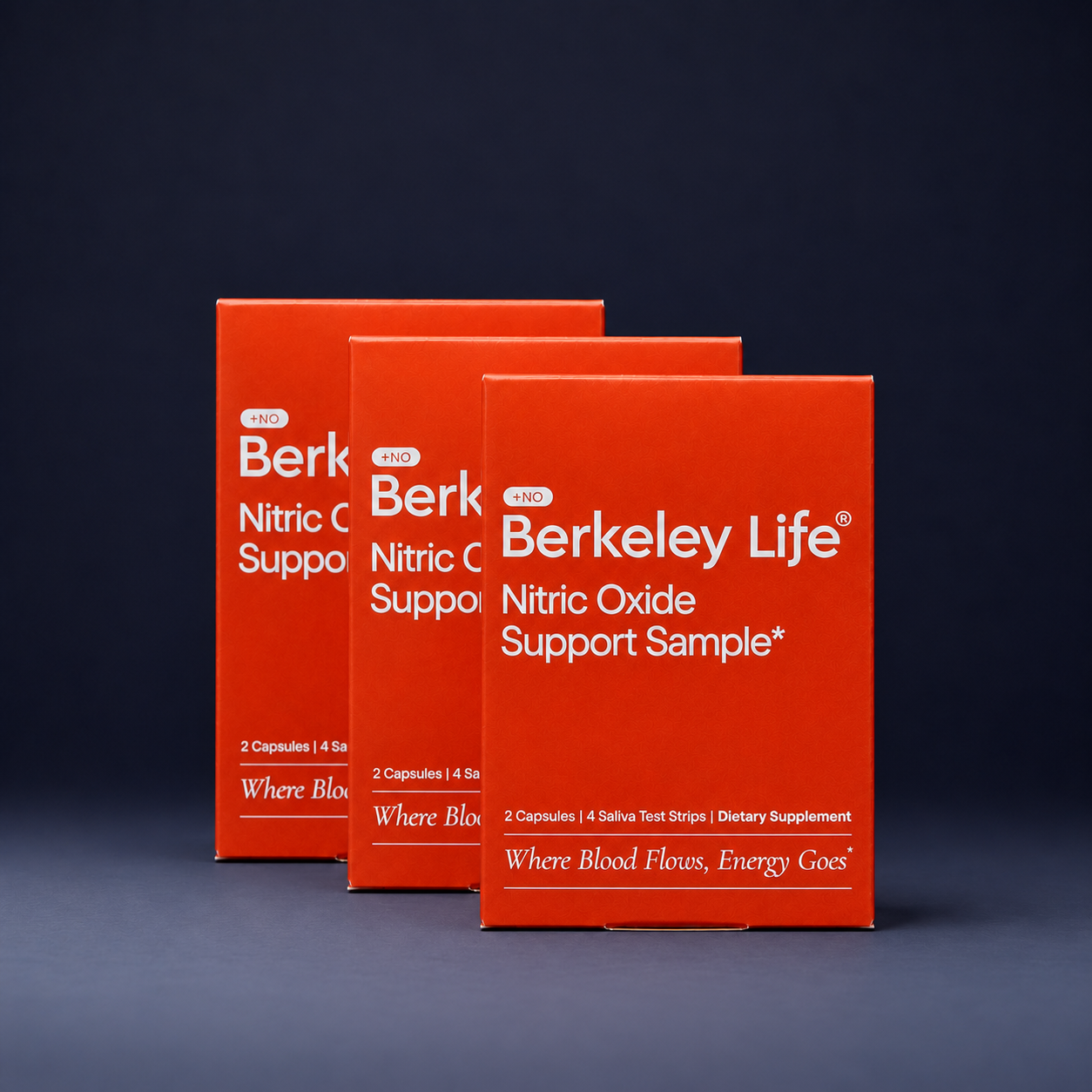
Meet the Berkeley Life Nitric Oxide Test Strips
Instead of guessing, Berkeley Life gives you a way to see your body’s Nitric Oxide status in real time.
You simply:
-
Place saliva on the strip
-
Wait a few seconds
-
Compare your color result
That’s it.
The color scale gives you a visual representation of your Nitric Oxide levels — making blood flow support tangible, measurable, and trackable.
For many people, it becomes the first time they’ve ever seen a wellness marker change in real life.
And that changes behavior.
Why People Love the Test Strip Experience
The test strips turn Nitric Oxide from a concept into an experience.
Instead of taking a supplement and hoping it works, users can:
-
Test before and after lifestyle changes
-
Track consistency
-
Monitor how diet impacts levels
-
See how sleep, exercise, stress, and hydration affect Nitric Oxide production
-
Build healthy habits around measurable feedback
It’s wellness with visible reinforcement.
And in a world obsessed with metrics, that matters.
What Low Nitric Oxide May Feel Like
Many people don’t realize declining blood flow may show up as:
-
Lower energy
-
Slower recovery
-
Cold hands and feet
-
Brain fog
-
Reduced exercise performance
-
Feeling “off”
-
Difficulty maintaining stamina
-
Age-related circulation concerns
Because blood flow impacts nearly every organ system, Nitric Oxide often becomes a foundational piece of the healthy aging conversation.
Food First: Supporting Nitric Oxide Naturally
Your body can support Nitric Oxide production through lifestyle habits like:
-
Eating nitrate-rich vegetables (beets, arugula, spinach)
-
Regular movement
-
Nasal breathing
-
Quality sleep
-
Stress management
-
Maintaining oral microbiome health
Berkeley Life Nitric Oxide Support was designed to complement these habits with targeted ingredients that help support healthy Nitric Oxide production and circulation.
But the most powerful part?
You can actually test and see the impact over time
The Future of Wellness Is Measurable
The next evolution of wellness isn’t just about doing more.
It’s about understanding what’s happening inside your body.
People are already tracking:
-
Glucose
-
Ketones
-
Recovery
-
Hydration
-
Sleep cycles
Blood flow deserves a seat at the table.
Because every cell, every workout, every recovery day, every healthy aging goal depends on circulation.
The best part? There’s a simple way to track it.